The free webinars and field guide give the diagnosis. The training is where the procedure becomes a competence: first a structured foundation, then an open-ended practice group that does not end. Two tracks, both delivered as weekly two-hour live cohorts.
An eight-week structured course that builds the framework from the ground up. No prior knowledge of the method is assumed: it starts at zero and builds systematically toward clinical use.
The curriculum integrates behavioral therapy, ACT, schema therapy, and body-oriented trauma work into one framework, additive to the methods participants already use, not a replacement for them.
Licensed psychotherapists, psychologists, and physicians who meet complex, comorbid, or treatment-resistant presentations where conventional protocols reach their limit. No prerequisite beyond licensure and clinical experience.
An open-ended weekly group that does not end. Where the Foundation is a course with a finish line, this is a continuous practice: live supervision on real cases, week after week, for as long as it remains useful.
It is deliberately perpetual. Competence with complex patients is not acquired in a fixed number of sessions; it is held and extended through ongoing supervised practice. Participants stay for as long as the group serves their work.
The method’s own claim is that the clinician’s regulation and judgment are part of the mechanism. That is not finished by a curriculum. The ongoing group is the structure that keeps it current: closer to a standing supervision practice than to a course.
The free tier is the diagnosis. The training is the procedure. Nothing in the free material is withheld to manufacture a purchase: the boundary is simply where a readable account ends and a supervised skill begins.
The five structural reasons and the mechanism, with primary literature. Diagnostic only; stops where the procedure begins.
The framework built systematically into a usable clinical procedure, in a small live cohort.
Open-ended weekly supervision and practice. The competence is kept current, not certified once.
Both tracks are led by Dr. Daniel Zeiss, who developed the scientific framework and serves as Continuing Education Director. Clinical supervision in the programme is led by him.
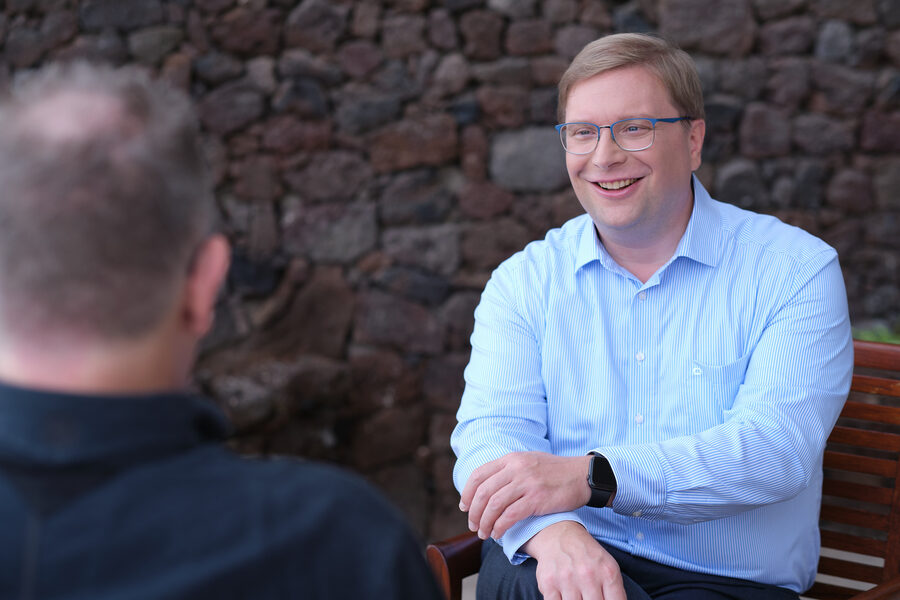
Developed the scientific framework of 4th Wave Behavioral Therapy from complex, comorbid, and treatment-resistant cases, the patients standard manualized work prepares clinicians least for. The framework was co-developed with Ingka Enyan, who evolved its applied somatic and experiential model. He leads both training tracks and the case supervision in them. In the United States he acts as Clinical Training Director and is not a US-licensed clinician; what is offered here is professional education for licensed professionals, not patient care and not clinical supervision in a jurisdictional sense. More about Dr. Zeiss →
Somatic therapist. Co-developed the methodology with Dr. Zeiss, in particular the body-oriented components of the framework.
It is a structured, supervised clinical training for licensed professionals, led by Dr. Daniel Zeiss, with methodological development by Dr. Zeiss and Ingka Enyan. Teaching and clinical supervision in the programme are carried by Dr. Zeiss throughout. The framework taught in both tracks is 4th Wave Behavioral Therapy. It is delivered live online in small groups; sessions are recorded and a supporting online academy is provided.
It is not a self-help programme, not a patient-facing service, not a substitute for licensure or jurisdictionally required supervision, and not a claim of guaranteed outcomes. The integrated framework has not yet been tested as a package in randomized controlled trials. Continuing-education recognition currently applies in Germany (Landesärztekammer Hessen); other jurisdictions only where explicitly stated. Language, time-zone, and the current cohort schedule are confirmed on enquiry.
The last series of the free webinar has run; the training tracks continue. Leave your details and you will hear when a date is set, and what we are working on in between. Free for licensed mental-health professionals.
